
HISSEMA
 ©
LUH
©
LUH
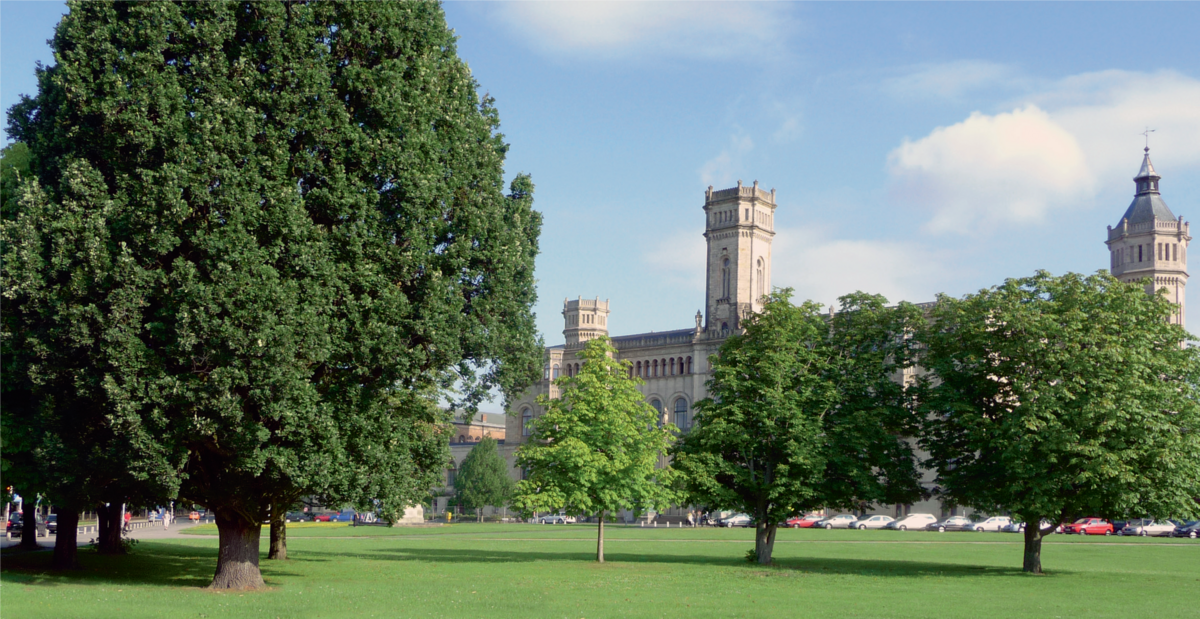
The Faculty of Economics and Management of the Leibniz University Hannover invites local and international students to its Hannover International Summer School of Economics and Management (HISSEMA). Get to know Hannover, a mid-sized city in the North of Germany, located not far from Berlin or Hamburg and discover an interesting course offer in an international atmosphere. The Summer School has so far been attended by over 200 international students. The program is conducted entirely in English.
Information about the HISSEMA
-
How you can profit
Hanover, the capital of the German state of Lower Saxony, is located not far from Berlin and Hamburg. It is home to world-renowned companies such as Volkswagen, Continental, Sennheiser or Bahlsen and is a modern, green and lively city in the center of Europe.
Leibniz Universität Hannover (LUH) has over 30,000 students. Its Faculty of Economics and Management is one of the leading in Germany and number one in Northern Germany.
- Gain international experience
- Study in the center of Europe
- Gain insights into German business culture
- Get first-hand information about the development of the German economy
- Become familiar with the European Union, its development and current challenges
- Expand your social network by making friends with people from overseas
-
Facts
When June 11th - July 15th, 2024 Where At the Faculty of Economics and Management of Leibniz Universität Hannover. Hannover is a medium-sized city in the north of Germany, not far from Berlin or Hamburg. Programme HISSEMA offers lectures in International Management and Business Administration with topics such as the German Economy, its integration into the European Union and the World Economy. The program is supplemented by lectures on the “German Culture, Business and Language”.
Local HISSEMA students will be assigned to the international students on the first day of arrival in Germany.
Accommodation Students will stay in student dormitories close to the University. Costs 1000 € (EU funds are available for EU students).
Including tuition fees, accommodation, public transport in Hannover, study materials, use of the faculty library, computer labs, free wifi, social events, a welcome pack and a multi-day excursion to Berlin (food and drinks not included). Additional fees for optional excursions.
Requirements Students admitted to this program must be in at least their second year of study and majoring in Business or Economics.
Application Deadline March 10th, 2024 -
The HISSEMA 2024 at a glance
Courses
The HISSEMA 2024 offers lectures in the areas of Business Administration and Economics with topics such as the German Economy, its integration into the European Union and the World Economy. The programme is supplemented by lectures on the German Culture and Business. Each course is worth 5 credit points (ETCS). In total, 15 credit points can be achieved. Recognition of credits depends on the regulations of your home university.
The curriculum topics are divided into three parts:
-
1) International Management & Economics
The course "International Management and Economics" consists of two parts:
- Topics related to Business Systems, CSR and Business Ethics
- Topics related to World Trade
Part 1 Business Systems, CSR and Business Ethics:
The course provides an introduction into National Business Systems and Comparative Industrial Relations. It thus provides insights into different economic cultures and strategies to address differences between business systems.
Corporations are embedded into an institutional setting of their parent-country. This setting, the (National) Business System, shapes e.g. the labour market, industrial relations, the education system or financial institutions. It therefore strongly shapes corporate decisions as well as strategies. Business Systems also reflect the degree and basis of trust between organizations, loyalty to outside groups or the importance of individual identity and rights that also influence corporate structures, values and decisions. Since many corporations have facilities in more than just one country, getting to know different Business Systems can help to reflect on and understand markets and strategies at home and abroad.
Corporations face many different demands from internal and external stakeholders. These demands might imply contradictory actions, might not all be equally justified or might even not represent all legitimate demands in a given situation. In these not so unusual situations, responsible decision-making becomes an ethical challenge. The course aims to provide perspectives to understand and analyse these dilemma situations in corporate contexts (but also in everyday life). The structure of ethical conflicts as well as different views on goodness are analytically introduced and strategies for informed and responsible decision making processes discussed. In the second part of the course, different business oriented approaches addressing these challenges like Corporate Social Responsibility, Creating Shared Value, Labelling or Reporting are presented and critically evaluated.
Part 2 World Trade:It is well recognized that economic growth and development are closely interacted with natural resources and the environment. Such interactions are intricately linked with the everyday life of individual persons and households, especially in developing countries where the issues and concerns are somewhat different as compared to developed countries. Sustainability is a much more immediate concept, since it must take into account of pressing concerns such as basic subsistence and even survival. Therefore, the aim of the course is to provide students with an understanding of the relationship between economic growth, development and environmental issues.
The course thus covers a range of topics including the drivers of economic growth, the contribution of natural resources and ecosystem services to economic growth and development, the effects of economic growth and development on the sustainable management of natural resources and the environment. The lectures are designed in a more advanced way, including theories, case studies, and exercises. The participants are thus familiar with the issues that relate environment and development at international, national and local levels.
Examination form: written exam -
2) The German Economy & the European Union
The course "German Economy and the European Union" consists of two parts:
- Germany and the European Union
- The German Welfare State
Part 1 Germany and the European Union:
- Analytical Preliminaries: Tools of Economic Thinking
- Germany as a Nation State: Historic Facts, Economic Figures, and Political Keystones
- Germany as a Member State of the EU-27: Promoter of the Process of Economic and Political Integration
- The Identity of the EU-27: Single Market (“Four Freedoms”) and Fiscal Federalism (Subsidiarity Principle versus Harmonization)
- The Joint Decision-Making of the EU-27: The Institutions and their Decision-Making Rules
- The Budget of the EU-27: Small amount, large impact, no “fiscal union”
- The Making of the European Monetary Union (EMU-20) within the EU-27: Two-Speed Integration, Loss of National Monetary Sovereignty
- The Performance of the European Monetary Union (EMU-20): Issues, Disputes, Outlook
Part 2 The German Welfare State- Historical Origins
- Welfare State in the German Social Markt Economy
- Education System
- System of Social Security
- Unemployment Insurance
- Health Insurance
- Pension Scheme
- Long-term Care Insurance - The Welfare State as Threat for the Social Market Economy
Examination form: written exam
-
3) German Culture, Business and Language class and excursion
The course "German Culture, Business & Language Class" consists of two parts:
- German Culture and Business
- Language Class and Excursion
Part 1 German Culture and Business:
The course gives students an introduction into how Germany became Germany. It addresses the role history still plays for many German particularities and aims at providing a base for better understanding "the" Germans of today, such as:- Why does the German Welfare State exist?
- Why does the parliament have a 5%-threshold for entry?
- Why was conscription mandatory until 2011?
- Why is French still the most common second foreign language in school?
- Why do Germans fear inflation, have 16 different schooling laws, and are so concerned with data protection?
- Why do Germans only wave their flags during European/World Cups?
Part 2 Language Class & Excursion:
Students will attend a German language class to learn some basics of the German language. Furthermore, an excursion to Berlin will provide insights into the German culture, politics and history.
Examination form: presentations
Application Process
-
1) Complete the application form
To apply for the HISSEMA 2024, please complete the following application form.
The document needs to be signed by your home coordinator and yourself.
-
2) Collect all the required documents
Please submit the following documents:
- Signed application form
- Official academic Transcript of Records
- Proof of English language Proficiency (if English is not your mother tongue)
- CV
- Motivation letter (1 page)
Please note that we can only accept applications in which sufficient English language skills can be attested by your home university. -
3) Submit your application via email
Please send your application form and documents as PDF files included in only one e-mail to guest@wiwi.uni-hannover.de by March 10th, 2024!
We are looking forward to receiving your application!
-
4) Wait for the confirmation
By April 2024 you will receive a final confirmation whether you can participate in our HISSEMA 2024 as well as further information and instructions.
Contact
Leitung Auslandsbüro

30167 Hannover
Beschäftigte

30167 Hannover